


Why 5.5% and 1.09% can describe the same posts
Compare a simple mean with an aggregate rate using a clearly defined two-post example.
Two posts, two denominators
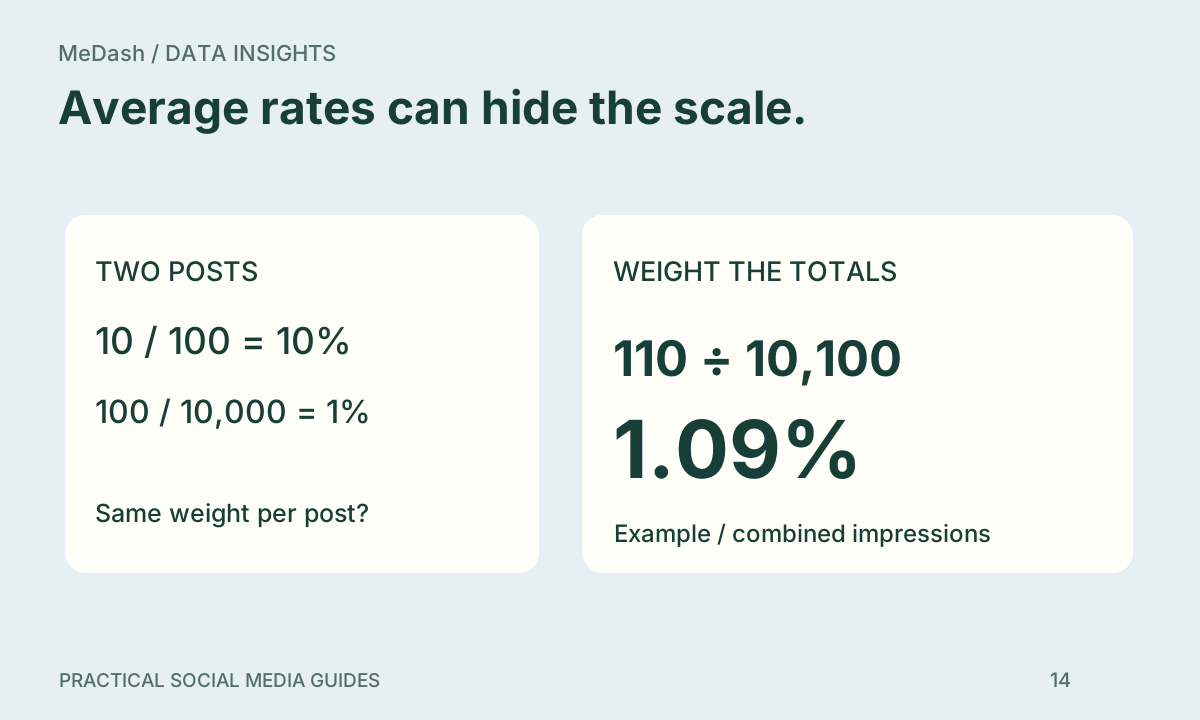
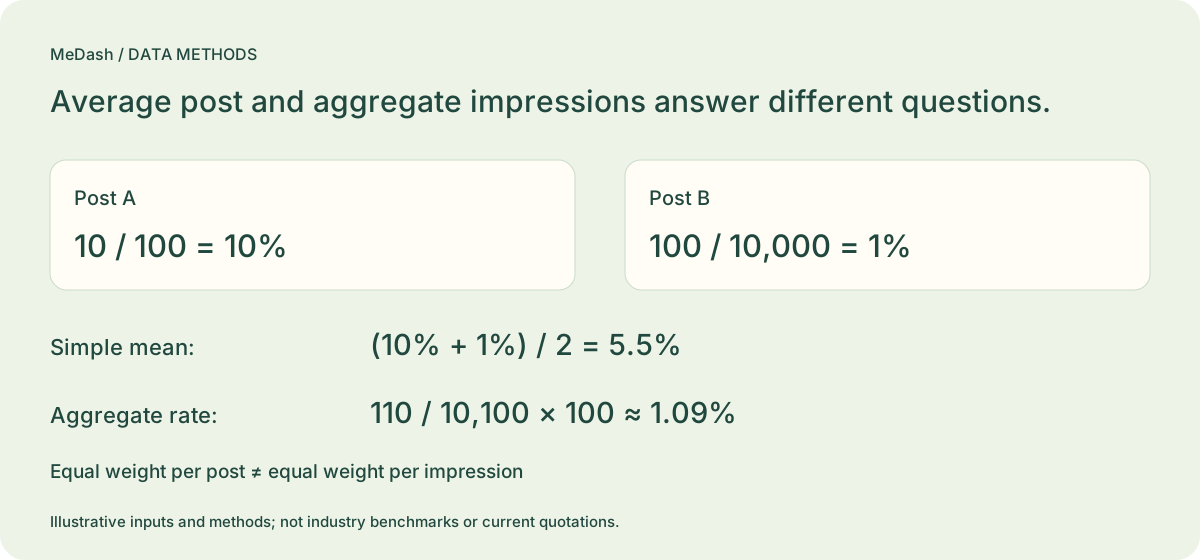
Post A receives 10 interactions from 100 impressions (10%). Post B receives 100 interactions from 10,000 impressions (1%). This is illustrative input, not customer data.
The average post
The simple mean is (10% + 1%) ÷ 2 = 5.5%. Each post has equal weight, so the smaller post influences this result as much as the larger one.
The aggregate impression
The aggregate is (10 + 100) ÷ (100 + 10,000) × 100 ≈ 1.09%. Each impression carries equal weight under the chosen definition. This describes the overall relationship between counted interactions and impressions.
Choose before reporting
Both numbers are valid under their stated definitions. Do not switch methods silently. Fix the interaction definition, reporting period, paid/organic scope and timezone. Display the numerator and denominator when a stakeholder needs to reproduce the result.
Try the engagement calculator and read the followers versus impressions guide.